
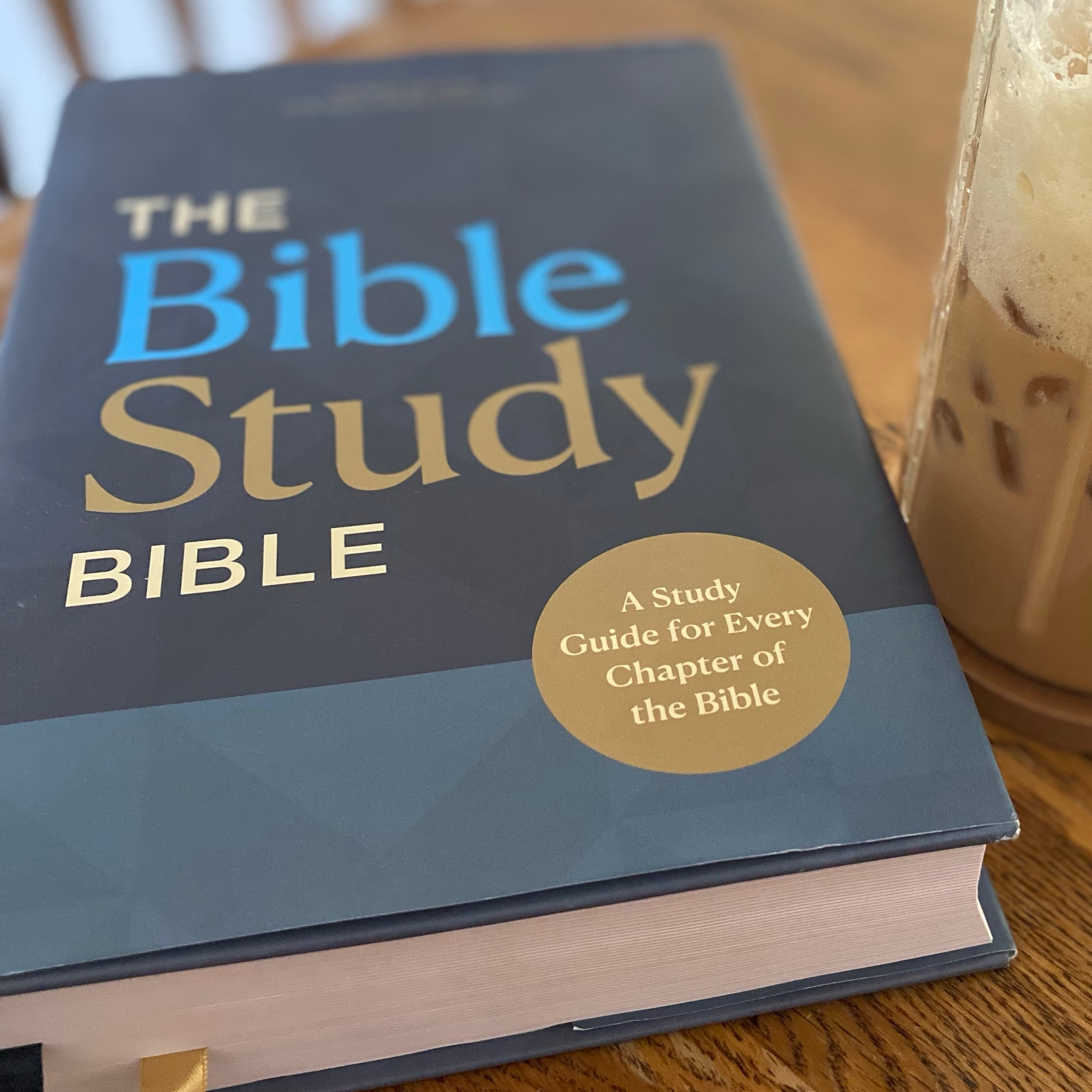
Study Bibles are useful tools if you are trying to deepen your understanding of scripture. The Bible Study Bible (NKJV Bible translation), published by Thomas Nelson Bibles, is a text that tries to help the reader study every chapter of the Bible by using hands-on activities and questions.
In the introduction, the author of the questions and commentary (Sam O’Neal) explained his purpose for this particular study bible. His arrangement is geared towards fostering discussion in a group setting. Although many of the questions I examined where thought-provoking, it also seemed to leave a lot room to misunderstand what is being read, particularly if you are not studying with a group that has a solid background knowledge of the scriptures.
From the section, “How to use The Bible Study Bible,” Sam O’Neal writes, “I have written the activities especially for study participants who are visual or hands-on learners, which means they may not get excited about sitting & listening for extended periods of time.”
Here are some of the features of The Bible Study Bible:
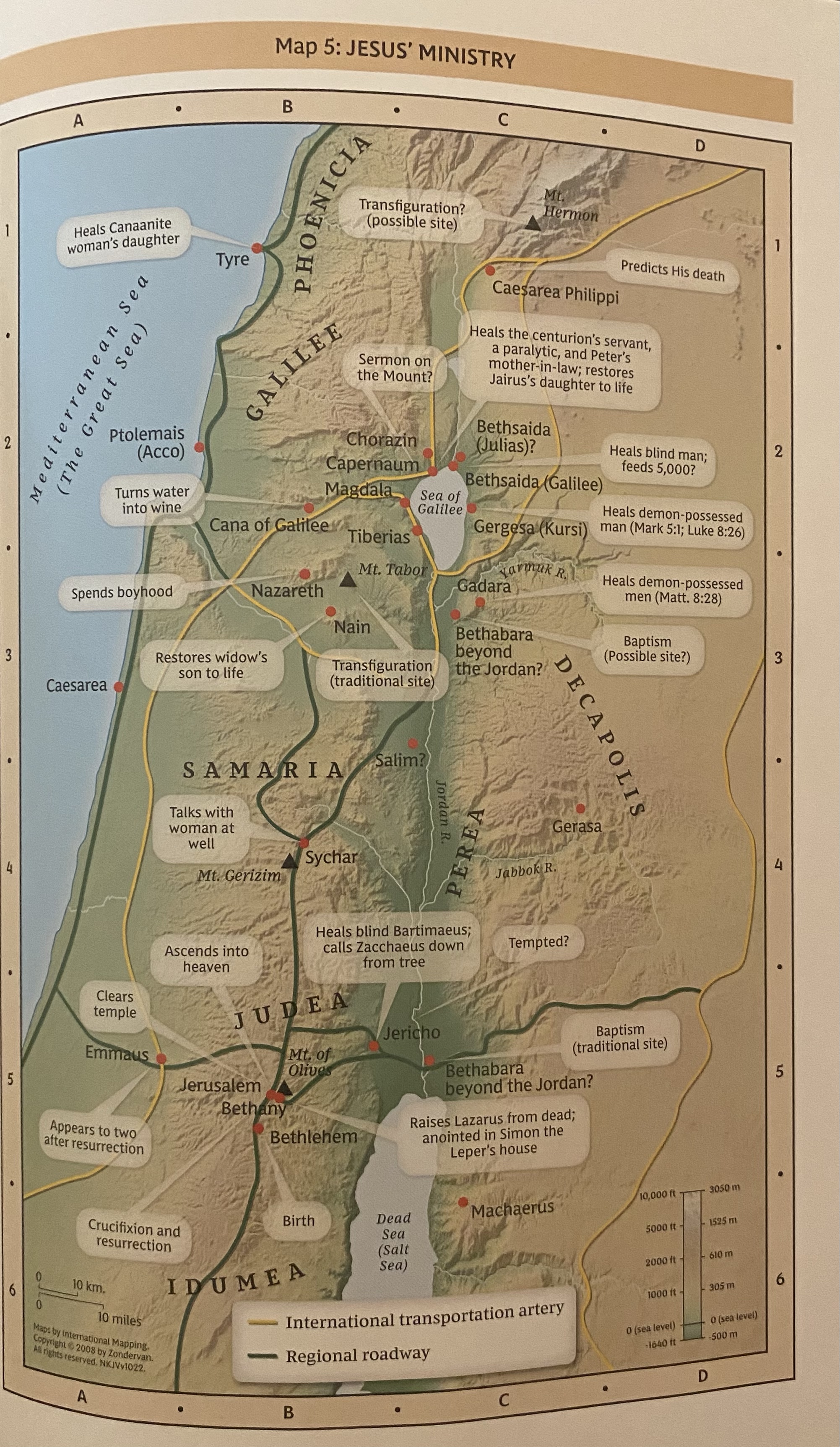
My copy is a hard-bound book that lays flat well and contains two bookmarks (helpful when flipping between passages!) This bible also contains a condensed concordance and a some full-color maps. The typeface is easy to read, but the pages do have a lot of show-through.
Pros:
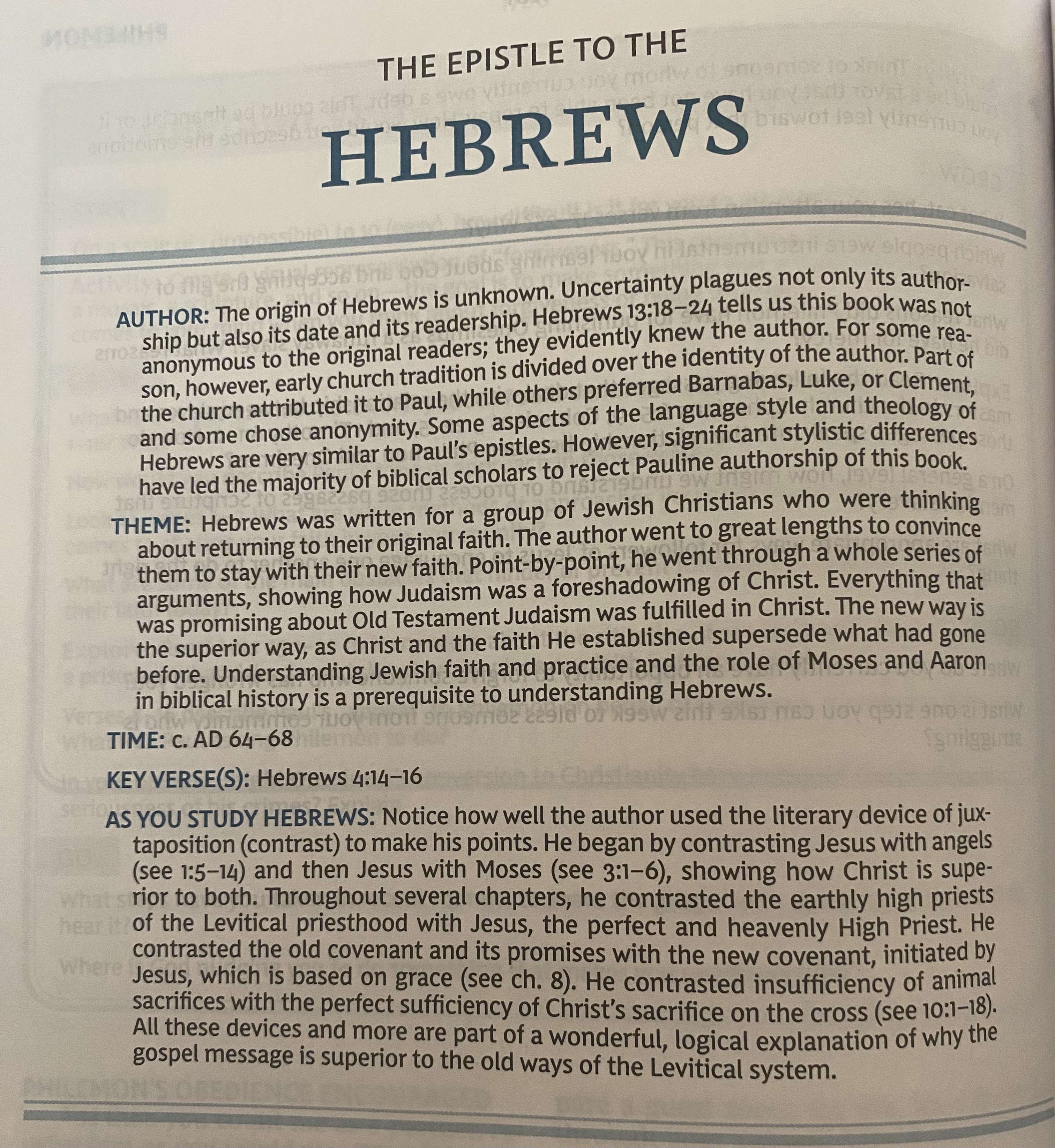
Background Sections: O’Neal did an excellent job arranging the background information sections at the beginning of each book. As you can see below, there is a brief but clear summary of authorship as well as some helpful points to consider while studying. The “time” section seems to refer to the time period being written about. Occasionally, it seems to refer to when the book was written. This is a bit confusing and it would have been helpful to have this clarified somewhere–particularly for those unfamiliar with the background of each book.
Study Questions: The study questions and activities are placed at the end of the chapter, which truly encourages readers to read the words of the Bible before engaging in reflection and/or discussion.
Front Reference Pages: Prior to the text, there is a “study maps” page. The title is a bit ambiguous. It is a brief quick reference for things like “I AM” statements of Christ, Names of God, etc. Per the introduction, this section can be used as source material for a topical study.
Engagement: It’s clear that the author of these questions & activities is seeking to engage readers in a conversation with the text and with their study groups. If you already have a great background in the scriptures, these questions could be thought-provoking.
Maps: The maps are quality, full-color maps.
Concordance: No study bible would be complete without a concordance that allows you to hunt down passages according to a key word that you remember! This concordance is easy to read and well-designed.
Cons:
No In-Text Cross-References. Unlike many study bibles, this one did not contain any cross-references to connected scriptures–not even cross references to prophecies quoted in the Old Testament. For example, in Matthew 3.3 when the prophet Isaiah is quoted, there is no side note referencing the chapter or verse where that prophecy is located (It’s in Isaiah 40.3).
Lack of textual footnotes. Most Bibles–whether they are classified as study bibles or not–contain footnotes relating to the translation, especially when a word could be translated another way or if a passage like Mark 16 or John 8 weren’t included in the earliest manuscripts.
Problems with Post-Chapter Questions. The author’s intention (as stated in his introductory section) is to begin each study set with a “nonspiritual” question. He feels that “neutral content” is helpful for “eas[ing] into” a study. While I do love a good comparison question to get my brain going, I’m not sure that all the questions will lead the reader towards truth.
For example, in the last several chapters of the book of Judges God is allowing us to see the result of rampant immorality and “follow your heart” philosophy. Skeptics occasionally quote from those chapters and will level the criticism that God is sanctioning rape, kidnapping, and brutality. I was hoping the thought questions in this section would steer the reader toward the key issues here, but instead, it has the potential to create more doubt & confusion:
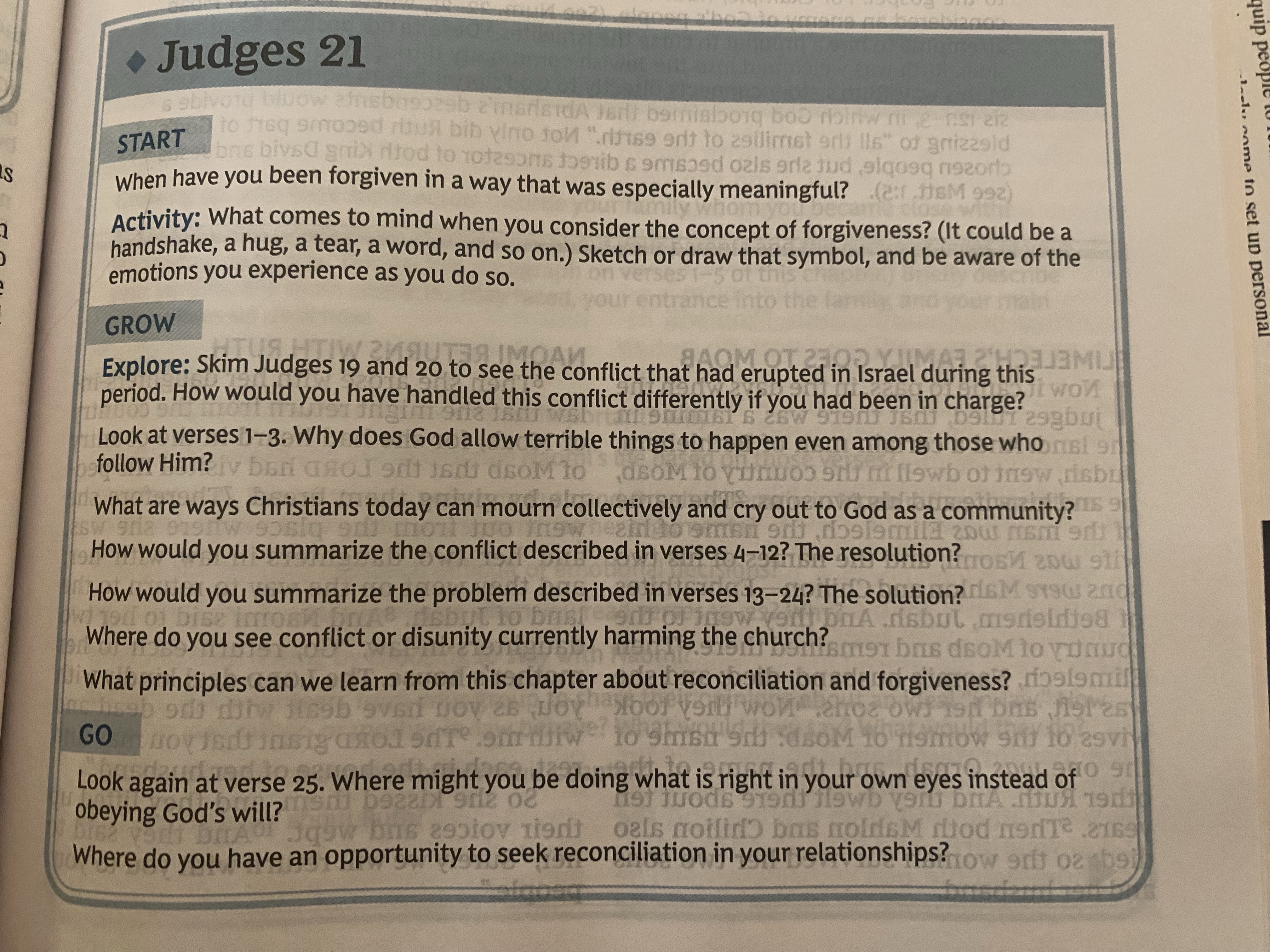
For example, he asks, “Why does God allow terrible things to happen even among those who follow Him?” Well, in this section of scripture, they aren’t following God! In fact Judges 21.25 says, “In those days there was no king in Israel. Everyone did what was right in his own eyes.” They weren’t following God. In fact, their behavior is closer to our own culture’s cry of “follow your heart!” Some questions lean far too heavily on a readers’ subjective viewpoint rather than encouraging objectivity.
The Bible Study Bible (NKJV Bible translation) has some positive points. The chapter-by-chapter questions are definitely helpful for students wanting to read the whole bible and not just their favorite chapters. While it has some good potential in its layout and the question format, it is lacking some key elements that could make it a solid study Bible. If you are someone trying to lead a small group study, this would be a helpful resource, providing you have a solid foundation in Biblical knowledge.
If you would like to purchase a copy of this Bible, click here to visit the FaithGateway Store. Product is also available at Amazon.
I received a copy of this Bible for free as a member of the Bible Gateway Blogger Grid for the purpose of honest, unbiased review. I received no monetary compensation for this review. I do not receive any affiliate money through clicks or links.

 Elihu's Corner